
There is one word that is used a lot today in various tenses. As a teacher I use it a great deal, especially in dealing with the subject of the brides’ spiritual maturity. But what is interesting is that one tense of the word is never used in the New Testament while both tenses are used in the Old Testament. When I ran across this the other day it opened a new line of thinking about the subject and once again reaffirmed how important (critical) our role is in the process of spiritual maturity. And yet at the same time we understand that the process is already completed!
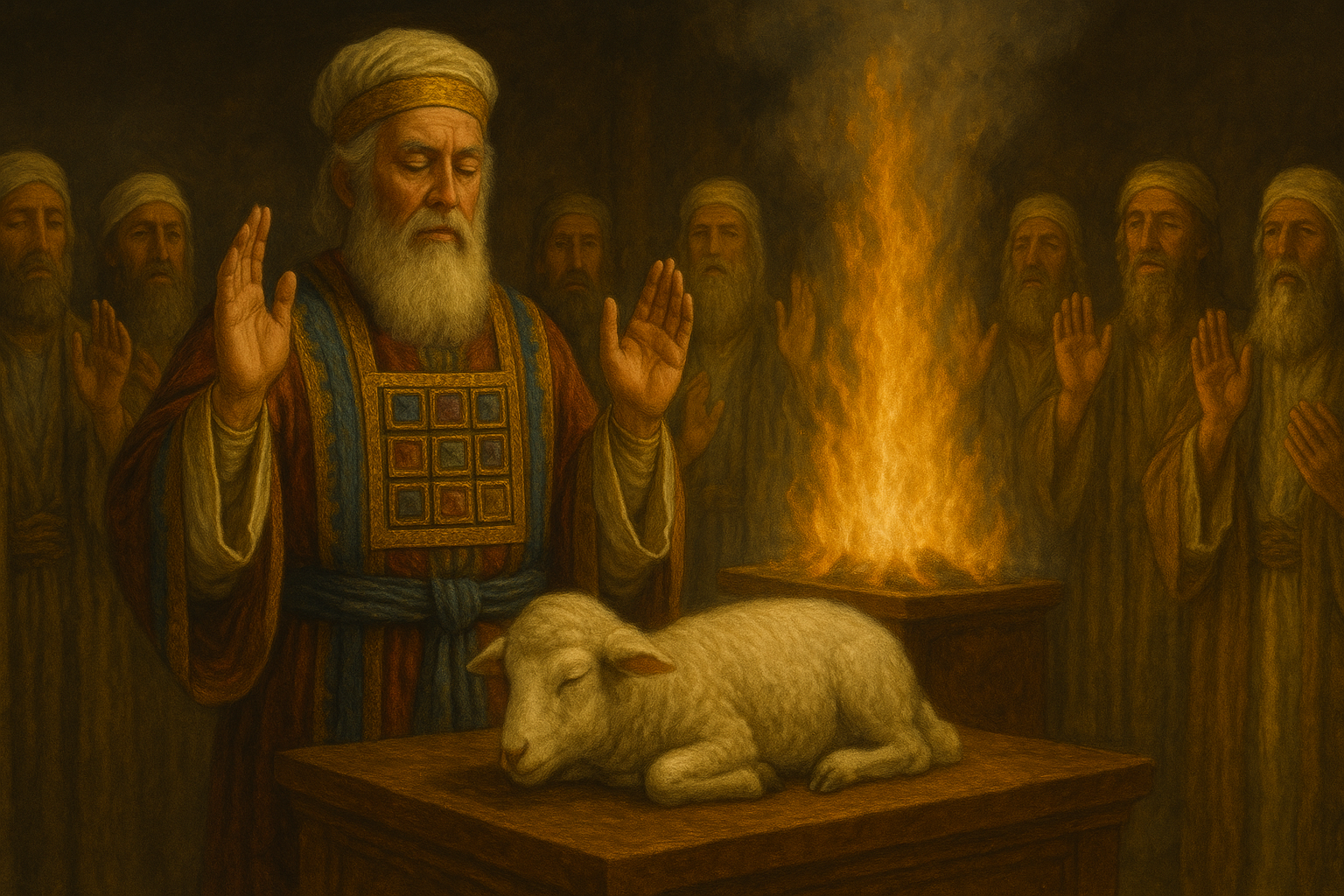
Throughout the Old Testament the Hebrew word qadash is used in the presence tense…”consecration.” It is used in referring to the process of consecration by animal sacrifice to consecrate Israel and the Israelites. It was ongoing and continued up until the final sacrifice of consecration was made on the cross. But the presence tense of the word egkainizo is never used in the New Testament. It is always used in the past tense; enekainisen (Greek):
Heb 10:20 By a new and living way, which he hath consecrated for us, through the veil, that is to say, his flesh; KJV
Because of Jesus’ sacrifice on the cross, we as His bride have not only been justified, we have been sanctified and glorified. We have touched on that many times before, but here I want to focus on what it means to be consecrated; set aside, dedicated, and made perfect in the eyes of God. It is done, it is complete, and yet it is part of what we are working out with fear and trembling; our salvation.
Most teachers of the Word today focus on consecration by relating it to the consecration of the “old man.” The problem is that teaching bypasses a very key element that leads to frustration and failure; according to Christian author Miles Stanford, it fails to address at best or ignore at worst, the issue of “death.”
The problem we as Christian’s face is what life has been consecrated? Far too many believe that it is our “old soul-life,” but that is not true. That idea folds into the problem we encounter throughout our Walk With God; self-centered thinking and action. God not only does not want anything from our old life, He rejects anything we present to Him in our old, selfish ways. He wants only what we have in our new life in Christ; the new life He has given us in His sacrifice on the cross. Paul covered that many times in his key teaching on the subject in Romans 6:
Rom 6:11,13 Likewise reckon ye also yourselves to be dead indeed unto sin, but alive unto God through Jesus Christ our Lord … Neither yield ye your members as instruments of unrighteousness unto sin: but yield yourselves unto God, as those that are alive from the dead, and your members as instruments of righteousness unto God.
The Revised Version makes it a little more clear… present yourselves unto God as alive from the dead. We are to consecrate ourselves to God through death on the cross with Jesus. Only through “death” in Christ can we truly “live” in Christ. Only then are we fully able to present our bodies as living sacrifices to Him (Rom 12:1).
God deals with His Son’s bride from the perspective that she “died in Him,” but most of the bride ignores this critical fact. They believe that the old man (their old fallen nature; their self-life) is somehow to be rehabilitated by the Holy Spirit. They miss the fact that cross has nullified our old Adamic life; it is beyond repair. And to focus our own “efforts” on trying to improve that life is fruitless and, more importantly, it is meaningless to God.
None of us will come to truly know our bridegroom in His life until we know (by experience) that our old self-life is still deep within us. When we come to grips with the fact that trying to rehabilitate our old nature only leads to failure, then we are ready to move on to spiritual maturity. Once again, Stanford hit the nail on the head… Our experience, upward, in the power of God, is just in proportion to our experience, downward, in ceasing from self.
The bottom line is to fully comprehend what happened to us at the cross. We were fully consecrated in the death of our old self-centered life, and our consecration in the new life we have in Christ. Our difficulty in working that out is that we continue to deal with our old flesh nature, trying to “make it better” in our own strength and power. We fail to realize that we have the strength and power of the Holy Spirit to help us accomplish that, but He will not lift a finger to assist us in trying to rehabilitate our “old selves.” He is only interested in seeing us grow and mature in Jesus, which we can only accomplish that if we leave the old man on the cross.
There are many members of the bride that are separated from the world but are not separated from themselves. Let’s not let ourselves be counted among that number. Remember, God works differently than we do and we need to adopt His view. He sees our success out of our failure and our life out of our death.
2 Cor 4:10-11 Always bearing about in the body the dying of the Lord Jesus, that the life also of Jesus might be made manifest in our body. 11 For we which live are always delivered unto death for Jesus’ sake, that the life also of Jesus might be made manifest in our mortal flesh.
Enekainisen… we have been consecrated; it is finished, but it is up to us to live out our consecration. And to do that we must first die in Christ before we can live in Christ. That is the key to spiritual maturity. We are “in” Christ by our accepting His death, but we are “of” Christ when we leave our old man on the cross. Then God can accomplish His perfect will for our life:
Rom 8:29 For whom he did foreknow, he also did predestinate to be conformed to the image of his Son, that he might be the firstborn among many brethren.
That is our goal, our life, and the glory we are privileged to share with our bridegroom. Our death and our life in Christ glorifies God. What more needs to be said than… I must decrease the He may increase!
You can learn more about this subject in my book series, The Way of Enoch. You can download the book for free at WalkWithGod.org.